
How to Use Dog Deterrent Spray to Protect Your Rugs (Natural and Store-Bought Options)
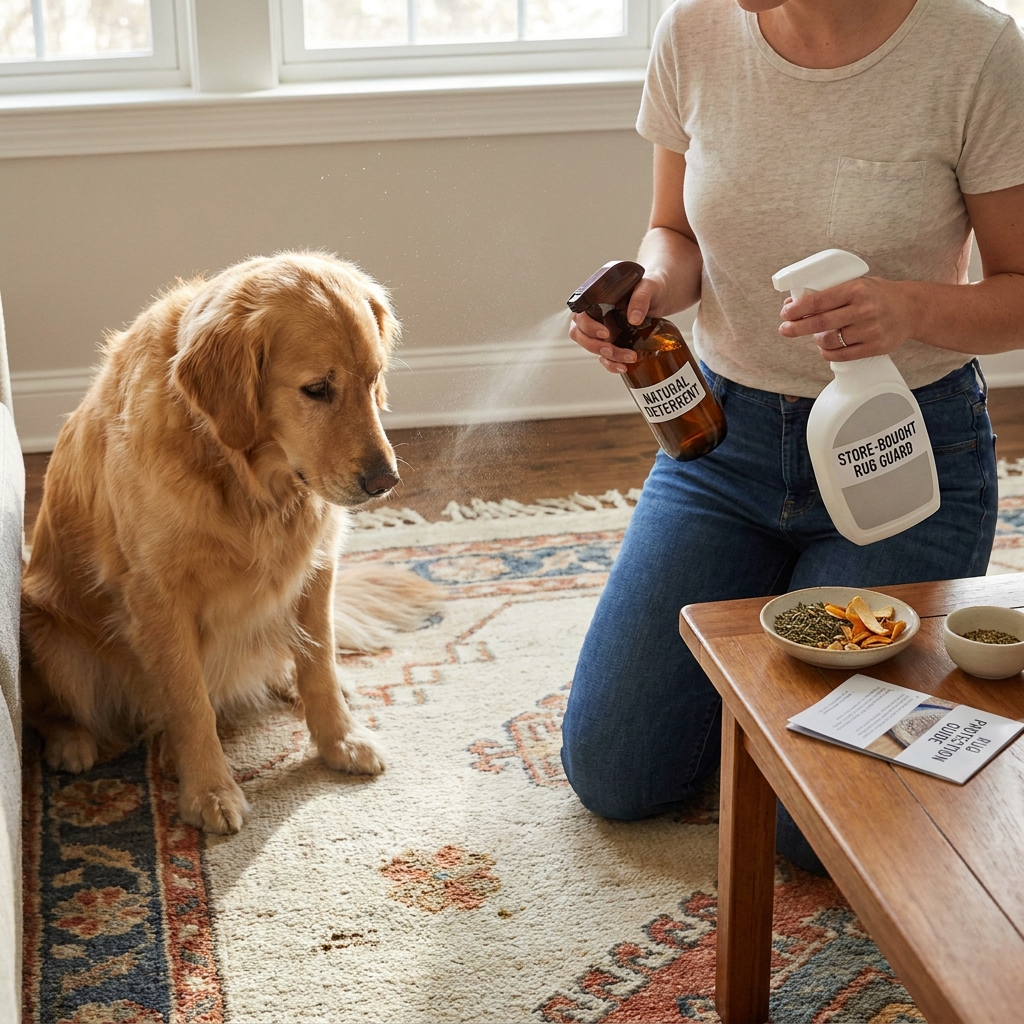
If you’ve ever walked into a room and found your favorite rug chewed up, soaked, or scratched beyond repair, you know how frustrating it can be. Dogs don’t ruin rugs out of spite — they do it because they’re bored, anxious, or simply following their instincts. But that doesn’t make it any less stressful for you. The good news is that a dog deterrent spray can be a simple and effective way to protect your rugs, furniture, and other spaces your dog keeps targeting. Whether you prefer a natural pet repellent or something you pick up at a store, understanding how these sprays work will help you use them the right way.
What Matters Most When Choosing a Dog Deterrent Spray
Before you grab the first bottle you see, it helps to know what actually makes a deterrent spray work — and what doesn’t.
It Should Be Safe First
Safety is everything. Any spray you use around your dog, your kids, or your floors needs to be non-toxic. Look for sprays that are free from harsh chemicals and safe to use on fabrics, rugs, and carpet. If you’re making your own at home, the same rule applies. A safe pet spray should not cause irritation to your dog’s skin, eyes, or nose beyond a mild, unpleasant scent.
It Should Actually Bother Your Dog
This sounds obvious, but it’s worth saying. Dogs have very sensitive noses, and they tend to avoid smells they find overwhelming or unpleasant. A good dog repellent spray works by targeting that sensitivity. Common scents that dogs dislike include bitter apple, citrus, vinegar, and certain herbal blends. The key is finding something your dog responds to, since every dog is a little different.
It Should Work on Your Specific Surface
Not all sprays are made for rugs or carpet. Some are designed for hard floors or furniture. Always check that the spray is safe for the surface you’re treating. Test a small hidden spot first to make sure it doesn’t stain or damage the material.
How Dog Deterrent Sprays Work
A dog deterrent spray works by creating a sensory experience your dog wants to avoid. Most sprays rely on strong, unpleasant smells or bitter tastes to discourage your dog from going near or chewing on a treated area.
Dogs explore the world mostly through scent. Their noses are thousands of times more sensitive than ours. A smell that barely registers to us can feel overwhelming to them. When a dog sniffs a sprayed area and gets hit with something they dislike — like a sharp bitter smell or a strong citrus scent — their natural response is to back away and avoid that spot.
This is why dog deterrent sprays can be helpful both as a carpet dog deterrent and as an anti-chew spray on furniture, baseboards, and other surfaces. They’re not painful or harmful — they just make the area less appealing.
Natural Dog Deterrent Sprays You Can Make at Home
Many pet owners prefer to start with what they already have at home. Natural pet repellents can be just as effective as store-bought options, and you know exactly what’s in them.
Citrus-Based Spray
Most dogs strongly dislike the smell of citrus. You can make a simple spray by mixing water with fresh lemon juice, lime juice, or orange peel extract. Spray it lightly onto your rug or around the edges of the area you want to protect. Reapply every day or two, or after cleaning.
Tip: Don’t soak the rug. A light mist is enough. Too much liquid can damage fibers or leave a sticky residue.
White Vinegar Spray
White vinegar has a sharp, acidic smell that most dogs find unpleasant. Mix equal parts water and white vinegar in a spray bottle and apply it to the edges or corners of your rug. The smell fades for humans quickly but lingers longer for dogs.
Tip: Test on a hidden area first. Vinegar can affect certain rug dyes or materials.
Diluted Essential Oil Spray
Some essential oils, like eucalyptus or lavender, can act as a natural indoor dog deterrent. However, this one requires extra care. Many essential oils are toxic to dogs if they’re too concentrated or ingested. Always dilute heavily with water (just a few drops per cup of water), and avoid using oils like tea tree, clove, or cinnamon, which can be harmful.
Tip: If you’re not sure whether an oil is safe, skip it and try citrus or vinegar instead.
Store-Bought Dog Deterrent Sprays: What to Know
Store-bought sprays are convenient and often formulated specifically to discourage dogs from chewing, scratching, or going to the bathroom on certain surfaces.
Bitter Taste Sprays (Anti-Chew Sprays)
These are one of the most common types of dog training aids. They’re designed to taste terrible to dogs. When your dog chews on a treated surface, they get a nasty bitter taste and usually stop right away. These work especially well for dogs that chew rug edges, furniture legs, or baseboards.
Tip: For bitter sprays to work, let your dog sniff or lightly taste the treated surface at first so they connect the smell with the bad taste. This speeds up the learning process.
Scent-Based Repellent Sprays
These work the same way natural sprays do — through smell. Commercial versions often use stronger concentrations and may last longer between applications. Many are marketed as both indoor dog deterrents and outdoor animal repellents, so they can work in multiple areas of your home and yard.
Tip: Follow the label for how often to reapply. Most need to be refreshed every few days, especially in high-traffic areas or after you’ve cleaned the rug.
Enzyme-Based Pet Deterrent Sprays
Some pet deterrent sprays use enzymes or natural plant compounds to neutralize smells that attract dogs back to the same spot. These are especially useful if your dog has already had an accident on the rug and keeps returning to the same area. The spray breaks down the scent markers that bring them back.
Tip: These work best when the area is clean first. Apply after you’ve fully cleaned up any accidents.
Using Deterrent Spray as Part of Dog Behavior Training
A spray alone won’t fix everything. Think of it as one tool inside a bigger picture. The most lasting results come when you combine a dog deterrent spray with consistent dog behavior training.
Here’s what that looks like in practice:
- Redirect, don’t just repel. When your dog approaches a treated rug and backs off, that’s a great moment to reward them for making the right choice. A calm “good dog” and a treat reinforces that staying away from the rug is a good decision.
- Give them something better. Dogs that chew rugs are often bored or anxious. Make sure they have appropriate chew toys, enough exercise, and mental stimulation throughout the day.
- Be consistent. Spray regularly and don’t skip applications. If the scent fades and your dog goes back to the rug without a consequence, you’ve lost ground.
- Manage the environment. For puppies or dogs with strong habits, consider blocking access to certain rooms until the behavior improves.
A dog training aid like a deterrent spray works best when your dog is also learning what they should do, not just what to avoid.
Common Mistakes to Avoid
Even good products won’t work well if they’re used the wrong way. Here are some mistakes that can get in the way:
Applying too much. More is not better. A light, even application works just as well as soaking the area — and it won’t damage your rug.
Only spraying once. Deterrent sprays wear off. Most need to be reapplied every one to three days, especially on rugs that get walked on or vacuumed regularly.
Not testing the surface first. Always spray a small hidden area first and wait a few minutes before treating the whole rug. This prevents staining or discoloration.
Using the wrong scent for your dog. Some dogs genuinely don’t care about citrus. Others are bothered by vinegar. If one approach isn’t working after a week, try a different scent.
Forgetting to reward good behavior. If your dog avoids the rug, acknowledge it. Positive reinforcement makes the lesson stick much faster.
Using sprays as a substitute for training. Sprays can manage the behavior, but they won’t teach your dog anything on their own. Pair them with gentle, consistent training for the best results.
A Final Word
Protecting your rugs from your dog doesn’t have to be a battle. With the right dog deterrent spray — whether homemade or store-bought — and a little consistency, you can guide your dog away from problem areas and toward better habits. Start simple, stay patient, and remember that your dog isn’t trying to frustrate you. They just need a little help understanding the rules. With time and the right approach, your rugs (and your sanity) will thank you.
Frequently Asked Questions
How often do I need to reapply a dog deterrent spray to keep it effective?
Most dog deterrent sprays need to be reapplied every one to three days, especially on rugs and carpets that get regular foot traffic or are vacuumed frequently. Natural sprays like citrus or vinegar tend to fade faster, while some commercial sprays may last a little longer. The key is consistency — if the scent fades and goes untreated, your dog may return to the area.
Are homemade dog deterrent sprays as effective as store-bought ones?
They can be, yes. Natural options like diluted white vinegar or citrus juice work well for many dogs because they target a dog's sensitive nose in the same way commercial sprays do. The main difference is that store-bought sprays may use stronger concentrations and last longer between applications. If a homemade spray isn't producing results after about a week, it may be worth trying a commercial alternative or switching to a different scent.
Is it safe to use a dog deterrent spray around children and other pets?
Most dog deterrent sprays made from natural ingredients like citrus or diluted vinegar are safe around children and other pets. However, you should always check product labels on store-bought sprays for any chemical ingredients. If using essential oils, be especially cautious, as some oils that repel dogs can also be harmful to cats or other animals if the concentration is too high.
My dog keeps returning to the same spot on the rug after accidents — will a deterrent spray help?
Yes, but the best approach is to use an enzyme-based pet deterrent spray after thoroughly cleaning the area first. Dogs are naturally drawn back to spots where they've previously had accidents because of lingering scent markers. Enzyme-based sprays break down those odors at a molecular level, removing the signal that tells your dog to return to that spot. Applying a repellent spray on top of an uncleaned area will be much less effective.
Can I use a dog deterrent spray on any type of rug or carpet?
Not necessarily. Some sprays can stain, discolor, or damage certain rug materials or dyes, particularly vinegar-based sprays or those with strong chemical ingredients. Before treating the full surface, always test the spray on a small, hidden area of the rug and wait a few minutes to check for any adverse reaction. This simple step can save you from accidentally damaging a rug you were trying to protect in the first place.